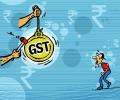
Over 100,000 small and medium-sized businesses are non-compliant with e-invoicing norms under the goods and services tax (GST) regime, a mandatory requirement for businesses with an annual turnover of over Rs 5 crore. E-invoicing provides real-time access to invoices that are prepared by the supplier on the purchase of goods, allowing faster accessibility to input tax credit, thereby limiting the manipulation of fake credit as it has to be generated before the transaction. "The default has been reported mainly in businesses with a turnover between Rs 5 crore and Rs 20 crore," a senior official informed

Taking both direct and indirect taxes, the gross collection is expected to grow 10.45 per cent to Rs 33.61 trillion in 2023-2024.

To tackle increasing demand, the Union Ministry of Power has urged central and state public-sector power-generating companies (gencos) and state power and energy departments to pick projects that are undergoing insolvency proceedings. The power ministry is looking at a quicker turnaround of these stressed power plants and enhancing power supply. Increasing demand is pushing states to scout for more power sources. "It is requested that state-owned gencos may be encouraged to participate in the corporate insolvency resolution process (CIRP) of stressed power assets, which are of strategic and commercial significance to the capacity addition plans of the states concerned.

The Centre could further moderate its divestment target for 2024-25 (FY25), as it does not expect large receipts from asset sales - except some ongoing strategic ones, including IDBI Bank, which could spill over into next financial year. Also, it may drastically reduce its FY24 divestment target of Rs 51,000 crore. "We are still evaluating the Budget estimates for FY25. "New big-ticket asset sales are unlikely.

'This year's detection of frauds and probable recovery will be mainly driven by several compliance measures put in place, and amendments made to the GST regime to plug revenue leakages particularly in new-edge sectors.'
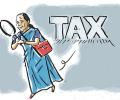
The Union government's finances witnessed significant improvement in August after a stressful first four months of the current fiscal year. India's gross tax revenue, comprising both direct and indirect taxes, for the first five months of 2023-24 surged 16.5 per cent year-on-year (Y-o-Y) to Rs 11.8 trillion. During the April-July period, gross tax revenue increased by a mere 2.8 per cent compared to the Budget Estimate of 12.1 per cent growth for FY24.

The Union government's revenue from securities transaction tax (STT) is on track to exceed its Budget projection for the current fiscal year, with the mop-up already surpassing 50 per cent of the annual estimate. Provisional figures reveal that the Centre has collected approximately Rs 14,000 crore in the first half of this fiscal year up to September, according to a government official. This amount exceeds half of the full-year target of Rs 27,625 crore set for FY24.

The ministry is of the opinion that there is a need for a rigorous regime for large unlisted companies, in contrast with the current "light-touch" regulation. "There is a defined regime for listed companies, by the Securities and Exchange Board of India (Sebi). "There is a view in the ministry that it needs to look at a framework for large unlisted companies," the senior official said.

'Inter-ministerial coordination, information on the proposed PSUs, and due diligence are taking longer than expected to conclude the process.'

The finance ministry on Thursday sought to clarify that there was no distress in household savings and the data indicated that changing consumer preference for different financial products was the real reason for the change in the pattern of household savings. The clarification comes in the backdrop of Reserve Bank of India data showing that household net financial savings rate is at its lowest in decades, at 5.1 per cent of GDP in FY23 compared to 7.2 per cent of GDP in FY22. The divergence in the data for household gross financial assets and liabilities is not a cause for concern for the government, as the loans have largely been taken to buy real assets or automobiles, the finance ministry said.

'To get a 100 per cent consensus document without any reservation, any bracket, any chair summary is unprecedented in the history of multilateral forums.'

Auditors seem to have developed a heightened sense of risk and are not content to tick the boxes and sign the papers.

'I'm pitching India for the strengths we offer, including the English language, engineers, doctors, nurses, professionals, innovative talent of startups.'

'I want us not to underestimate Indian voters. They can tell good work from bad.'

Crypto assets should not be granted official currency or legal tender status, the much-awaited synthesis paper by the International Monetary Fund (IMF) and Financial Stability Board (FSB) has said ahead of the G20 leadership summit under India's presidency. However, the report has argued against a blanket ban on activities linked to crypto assets, explaining that such a move can be costly as well as technically demanding to enforce. Central banks should avoid holding crypto assets in their official reserve as they pose a risk to monetary and global financial stability, according to the synthesis paper.

Life Insurance Corporation (LIC) may require at least five more years to comply with the minimum public shareholding of 25 per cent beyond the current exempted timeline of 2027. Formal communication in this regard had been shared recently with the finance ministry, underlining LIC's roadmap, plans of further dilution of stake, current norms around public float, and challenges ahead, a government source familiar with the matter said. "Going forward, we will have to take a call, along with Sebi (Securities and Exchange Board of India) and the Department of Economic Affairs on the roadmap for minimum public shareholding (MPS).

The Competition Commission of India has introduced draft regulations for combinations or mergers, under the new competition Act, to bring global deals in the digital space, including those involving Big Tech companies, under its scanner. The draft regulations would provide guidance on the valuation of merger transactions and the criteria for assessing sustainable operations in India for companies. The proposed rules mention that if the number of users and subscribers, or the turnover or gross merchandise value in India is over 10 per cent of the global figure, the company would be considered to have substantial business operation in India and would need CCI approval for the merger.

The government is confident of meeting the fiscal deficit target of 5.9 per cent of gross domestic product (GDP) and the nominal GDP target of 10.5 per cent despite pressure in the initial months of FY24, Economic Affairs secretary Ajay Seth told Business Standard. Normally the initial months of any financial year see proportionally a higher fiscal deficit because the expenditure is evenly paced while revenue picks up in the later months, he said. "This year the proportional fiscal deficit so far is much closer to the target than in most other years.

Almost all verification and assessments of returns selected for scrutiny are being done electronically through an anonymous back office, manned by tax experts and officials, without any personal interface between taxpayers and officers.
India's gross tax revenue, comprising both direct and indirect taxes between April and July, reported a growth rate of merely 2.8 per cent to Rs 8.9 trillion compared to the same period a year ago, as shown by government data on Thursday. This growth was dampened by direct tax figures, offsetting the healthy growth in goods and services tax collections and Customs duties. While net tax revenue contracted by 12.6 per cent to Rs 5.8 trillion up to July, accounting for 25 per cent of the Rs 23.3 trillion full-year target, this could be attributed to the increased tax devolution to states during the period.
 © 2025 Rediff.com - Investor Information - Advertise with us - Disclaimer - Privacy Policy - Sitemap - Feedback - About us - Terms of use - Grievances